Welding Procedure Specifications (WPS): Complete Guide for Industrial Contractors
What Is a Welding Procedure Specification (WPS)?
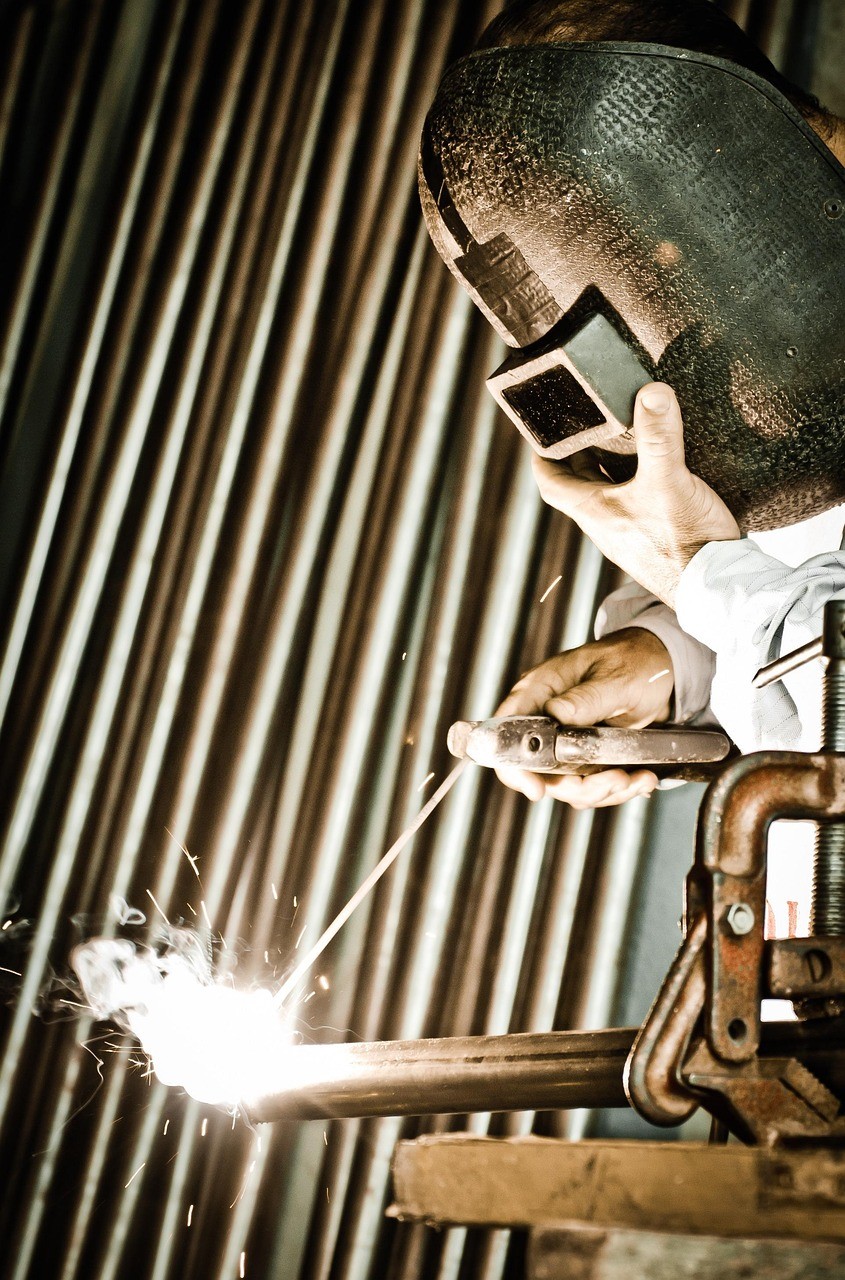
A Welding Procedure Specification (WPS) is a formal written document that provides detailed instructions for making production welds. Think of it as a recipe that welders must follow to ensure consistent, code-compliant weld quality across your entire project.
For contractors and procurement managers, understanding WPS requirements isn’t just about compliance—it’s about project risk management. A properly qualified WPS protects you from costly rework, inspection failures, and potential liability issues down the line.
The WPS defines every critical variable: base metal type, filler metal specification, welding process, joint design, preheat temperature, interpass temperature, and post-weld heat treatment requirements.
Why Does Your Project Need a Qualified WPS?

Wondering whether you can skip the WPS qualification for smaller jobs? That’s a common question, but the answer depends on your project’s governing codes.
ASME Section IX and AWS D1.1 both mandate WPS qualification for most pressure-containing applications. Here’s what happens without a qualified WPS:
| Risk Factor | Potential Impact |
|---|---|
| Code Non-Compliance | Failed inspections, project delays, contractual penalties |
| Quality Inconsistency | Variable weld properties, unpredictable performance |
| Liability Exposure | Increased risk in case of in-service failures |
| Client Confidence | Reduced trust from owners and engineering firms |
For oil & gas, petrochemical, and power generation projects, WPS qualification isn’t optional—it’s a contractual requirement.
The WPS-PQR-WPQ Relationship
Understanding how these three documents work together is essential for managing your welding program effectively.
WPS (Welding Procedure Specification)
The WPS is the instruction document given to welders. It specifies:
- Base material specifications (ASTM grades, P-Numbers)
- Filler metal classification (AWS A5.x specifications)
- Welding process (SMAW, GTAW, GMAW, FCAW, SAW)
- Joint geometry and preparation
- Electrical characteristics (polarity, amperage range, voltage range)
- Travel speed parameters
- Shielding gas composition and flow rate
- Preheat and interpass temperature ranges
- Post-weld heat treatment (PWHT) requirements
PQR (Procedure Qualification Record)
The PQR is the test report that proves your WPS produces sound welds. It includes:
- Actual welding parameters used during testing
- Base metal and filler metal certifications
- Mechanical test results (tensile, bend, impact, hardness)
- NDE reports (RT, UT, MT, PT)
- Date of qualification and testing laboratory information
Key point: The PQR supports the WPS. You cannot have a qualified WPS without a supporting PQR.
WPQ (Welder Performance Qualification)
While the WPS qualifies the procedure, the WPQ qualifies the welder. Even with a perfect WPS, only welders with valid WPQs for that specific WPS can perform production welding.
Essential Variables vs. Non-Essential Variables
Not all changes to your WPS require requalification. ASME Section IX divides variables into three categories:
Essential Variables
These require requalification if changed. Examples include:
- Change in base metal P-Number group
- Change in filler metal F-Number
- Addition or deletion of shielding gas
- Significant change in heat input
- Change from single-pass to multi-pass technique
- Deletion of preheat or PWHT
Non-Essential Variables
These can be modified without requalification. Examples:
- Joint design details (within qualified limits)
- Welding position (for certain processes)
- Travel speed (within qualified range)
- Specific amperage (as long as within qualified range)
Supplementary Essential Variables
These become essential only when impact testing is required:
- Heat input limitations
- Specific temper bead requirements
- Specific cooling rate controls
Common WPS Qualification Tests
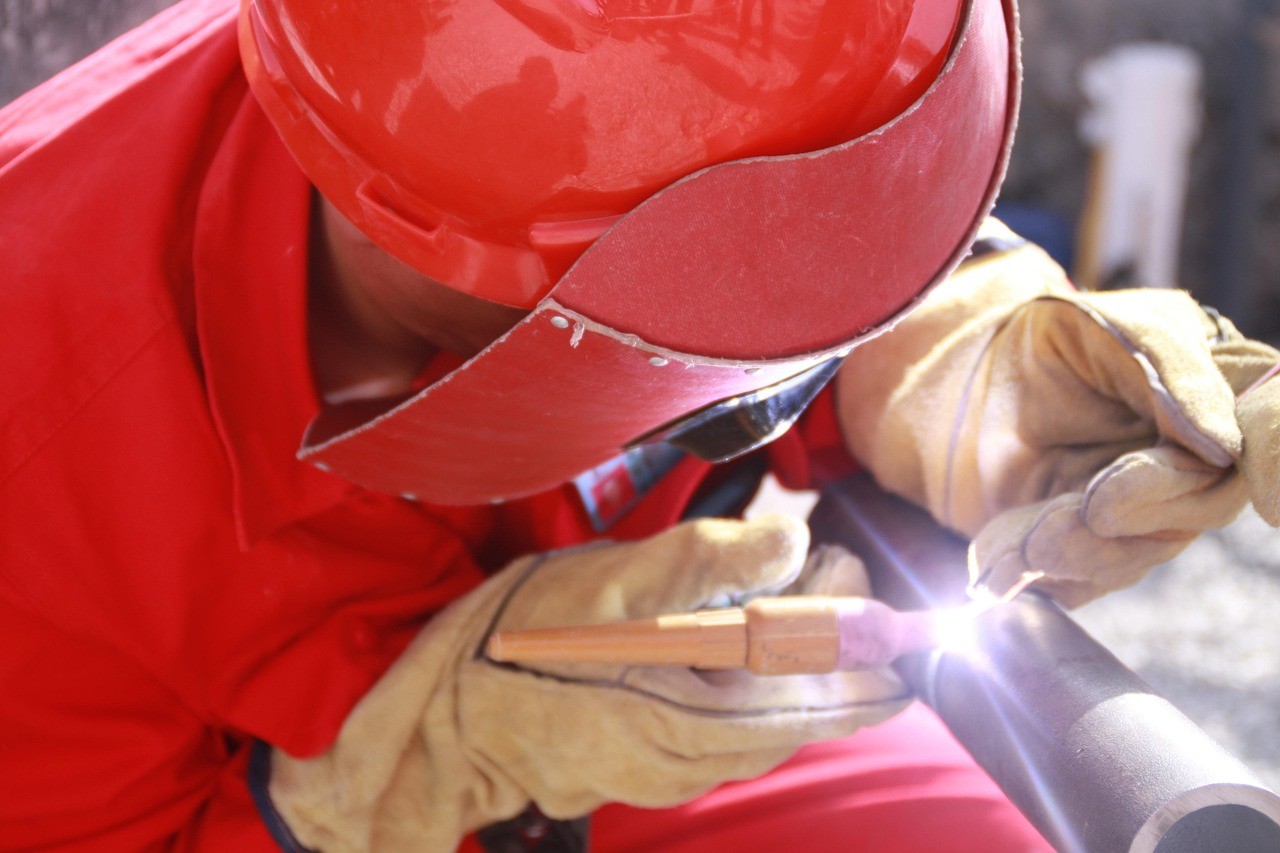
Your PQR will include mechanical testing to verify weld integrity. The specific tests depend on your application code:
Tensile Testing
Verifies the weld’s ultimate tensile strength meets or exceeds the base metal’s minimum specified strength. Typically requires two tensile specimens for butt welds.
Bend Testing
Demonstrates weld ductility and soundness. Root bend and face bend specimens are bent 180° around a specified mandrel without cracking.
Impact Testing (Charpy V-Notch)
Required for low-temperature service applications. Tests the weld’s toughness at specified service temperatures.
Hardness Testing
Verifies the weld and heat-affected zone (HAZ) don’t exceed maximum hardness limits, particularly important for sour service applications (NACE MR0175).
Macro/Micro Examination
Cross-sectional analysis to verify weld penetration, fusion, and microstructure.
WPS Format and Required Content
A properly formatted WPS should include these sections:
WPS No.: _______________    Date: _______________
Revision: _______________   PQR No.: _______________

1. JOINT CONFIGURATION
   - Joint type (butt, fillet, socket, etc.)
   - Backing material (if used)
   - Weld progression (single-pass, multi-pass)

2. BASE METALS
   - P-Number: ______  Group Number: ______
   - Material specification (ASTM A106 Gr.B, etc.)
   - Thickness range qualified

3. FILLER METALS
   - F-Number: ______  A-Number: ______
   - AWS classification (E7018, ER70S-6, etc.)
   - Diameter range: ______
   - Supplemental filler metal (if applicable)

4. WELDING PROCESS
   - Process type (SMAW, GTAW, GMAW, etc.)
   - Current type and polarity (DCEP, DCEN, AC)

5. ELECTRICAL CHARACTERISTICS
   - Amperage range: ______
   - Voltage range: ______
   - Travel speed range: ______

6. SHIELDING GAS
   - Composition: ______
   - Flow rate: ______

7. THERMAL TREATMENT
   - Preheat temperature: ______
   - Interpass temperature: ______
   - PWHT temperature and time: ______

8. TECHNIQUE
   - String or weave bead
   - Initial and interpass cleaning methods
   - Peening requirements (if applicable)
Material Groupings: P-Numbers and F-Numbers
ASME Section IX uses grouping systems to reduce the number of qualifications required.
P-Numbers (Base Metals)
Base metals are grouped by weldability characteristics:
| P-Number | Material Type | Examples |
|---|---|---|
| P-1 | Carbon Steel | ASTM A106, A516, A234 WPB |
| P-3 | Low Alloy Steel | ASTM A335 P11, P22 |
| P-4 | Alloy Steel | ASTM A335 P5, P9 |
| P-5 | Chromium-Molybdenum | 5Cr-½Mo, 9Cr-1Mo |
| P-6 | Martensitic Stainless | 410, 420 |
| P-7 | Ferritic Stainless | 405, 430 |
| P-8 | Austenitic Stainless | 304, 316, 321 |
| P-9 | Nickel Alloys | Inconel 625, Hastelloy C276 |
| P-10 | Titanium & Zirconium | Gr.1, Gr.2 Titanium |
Qualification rule: Qualifying with a higher P-Number typically qualifies lower P-Numbers within the same group.
F-Numbers (Filler Metals)
Filler metals are grouped by usability characteristics:
| F-Number | Description | Examples |
|---|---|---|
| F-1 | Carbon Steel Electrodes | E6010, E7018 |
| F-2 | Low Alloy Steel Electrodes | E8018-B2, E9018-B3 |
| F-3 | Stainless Steel Electrodes | E308-16, E316-15 |
| F-4 | Nickel Alloy Electrodes | ENiCrFe-3, ENiCrMo-3 |
| F-5 | Copper Alloy Electrodes | ECu, ECuSi |
| F-6 | Aluminum Alloy Electrodes | E4043, E5356 |
Typical WPS Qualification Timeline
Planning your welding qualification schedule? Here’s what to expect:
| Phase | Duration | Activities |
|---|---|---|
| WPS Development | 1-3 days | Draft WPS parameters, review code requirements |
| Test Coupon Preparation | 1-2 days | Material procurement, joint preparation |
| Welding & NDE | 1-3 days | Coupon welding, radiographic/ultrasonic testing |
| Mechanical Testing | 3-5 days | Tensile, bend, impact testing at external lab |
| Documentation | 1-2 days | PQR compilation, WPS finalization |
| Total | 7-15 days | From start to qualified WPS |
Expedited options: Some testing facilities offer rush services (3-5 day turnaround) at premium rates.
Common WPS Mistakes to Avoid
Based on our experience reviewing contractor documentation, here are the most frequent errors we see:
❌ Incomplete Variable Documentation
Listing amperage as “150A” instead of a qualified range like “140-180A”. The WPS should specify ranges that were actually tested and qualified.
❌ Missing Essential Variables
Forgetting to specify shielding gas composition, back purging requirements, or temper bead techniques when these were used during qualification.
❌ Thickness Range Errors
Qualifying with ½" coupon but claiming qualification for ¼" to 2" production thickness. ASME Section IX has specific rules about qualified thickness ranges based on coupon thickness.
❌ PQR/WPS Mismatch
The PQR shows actual amperage of 165A, but the WPS specifies 120-140A. The WPS range must encompass the actual values recorded on the PQR.
❌ Expired Qualifications
Some codes require WPS requalification after significant code edition changes or if the procedure hasn’t been used for extended periods.
Industry-Specific WPS Requirements
Different industries have additional WPS considerations beyond ASME Section IX:
Oil & Gas (ASME B31.3 / B31.4 / B31.8)
- Sour service applications require hardness testing per NACE MR0175/ISO 15156
- Additional impact testing for low-temperature pipelines
- Strict controls on heat input for certain materials
Power Generation (ASME Section I / VIII)
- Enhanced documentation requirements for nuclear applications (ASME Section III)
- Specific WPS requirements for boiler tube welding
- Additional bend test specimens for certain applications
Structural Steel (AWS D1.1)
- Different P-Number grouping system
- Prequalified WPS options for common carbon steel joints
- Specific requirements for cyclic loading applications
Shipbuilding (ABS / DNV / Lloyd’s)
- Classification society approval required
- Additional testing for cryogenic service
- Specific requirements for aluminum-to-steel transitions
Managing Your WPS Library
For contractors running multiple projects, maintaining an organized WPS library is critical:
Digital Organization
- Use consistent naming conventions (WPS-XXX-SMAW-CS-001)
- Link each WPS to its supporting PQR(s) in your database
- Track revision history and superseded procedures
- Maintain backup copies off-site
Qualification Tracking
- Monitor expiration dates for time-limited qualifications
- Track which WPSs are active on which projects
- Maintain welder qualification matrices linked to WPS library
Continuous Improvement
- Review WPS performance data from production welding
- Update procedures based on field feedback
- Consolidate similar WPSs to reduce library complexity
When to Develop New WPS vs. Modify Existing
Not every job requires a brand-new WPS qualification. Consider these scenarios:
Modify Existing WPS When:
- Base metal change is within the same P-Number group
- Only non-essential variables are changing
- Thickness range is within already qualified limits
- Filler metal change is within the same F-Number
Develop New WPS When:
- Base metal P-Number changes to a different group
- New welding process is required
- Application requires impact testing and existing WPS wasn’t impact qualified
- Client specifications exceed your current qualification limits
Cost Considerations for WPS Qualification
Budget-conscious contractors should factor in these costs:
| Cost Component | Typical Range (USD) |
|---|---|
| Labor (welding coupon) | $500 - $1,500 |
| NDE Testing | $300 - $800 |
| Mechanical Testing | $800 - $2,000 |
| Documentation/Engineering | $400 - $1,000 |
| Expedite Fees (optional) | $500 - $1,500 |
| Total per WPS | $2,500 - $6,800 |
Pro tip: Qualify multiple WPS variations in a single test coupon when possible. One PQR can support multiple WPSs if the essential variables are properly documented.
Frequently Asked Questions
Can I use a WPS from another company?
No. WPS qualifications are company-specific. A WPS qualified by Contractor A cannot be used by Contractor B, even if the procedures are identical. Each contractor must qualify their own WPSs.
How long does a WPS remain valid?
ASME Section IX doesn’t specify an expiration date. However, WPSs may become invalid if:
- The governing code edition changes and the WPS doesn’t meet new requirements
- The procedure isn’t used for an extended period (company policy dependent)
- Essential variables are modified without requalification
Do I need separate WPSs for each material thickness?
Not necessarily. A single WPS can qualify a thickness range based on the test coupon thickness. For example, qualifying with a 1" coupon typically covers ¼" to 2" production thickness.
Can one PQR support multiple WPSs?
Yes. A single PQR can support multiple WPSs as long as all essential variables are documented and each WPS falls within the qualified ranges established by the PQR.
What’s the difference between prequalified and qualified WPS?
Prequalified WPS (AWS D1.1 only) are procedures that don’t require testing if they meet specific code-specified parameters. Qualified WPS requires actual testing and PQR documentation. ASME Section IX doesn’t recognize prequalified WPS—all procedures must be qualified.
Conclusion: Your WPS Strategy Matters
A well-managed WPS library isn’t just about code compliance—it’s a competitive advantage. Contractors with comprehensive, properly qualified WPSs can:
- Bid on more complex projects
- Reduce inspection-related delays
- Demonstrate quality commitment to clients
- Minimize rework and warranty claims
Ready to review your welding procedure qualifications? Our team can help assess your current WPS library, identify gaps for your target markets, and develop a qualification strategy that balances compliance with cost-effectiveness.
Contact our welding engineering team to discuss your specific project requirements and ensure your welding procedures meet all applicable code requirements.
Related Resources:
Butt Weld Elbow: Material, Standards, and Buying Guide
ASME B16.9 Standard Guide: Factory-Made Wrought Buttwelding Fittings
Related Article

CONTACT US
Subscribe to our newsletter to receive the latest information