
Sanitary Cartridge Filters: Complete Selection & Application Guide
Quick Answer
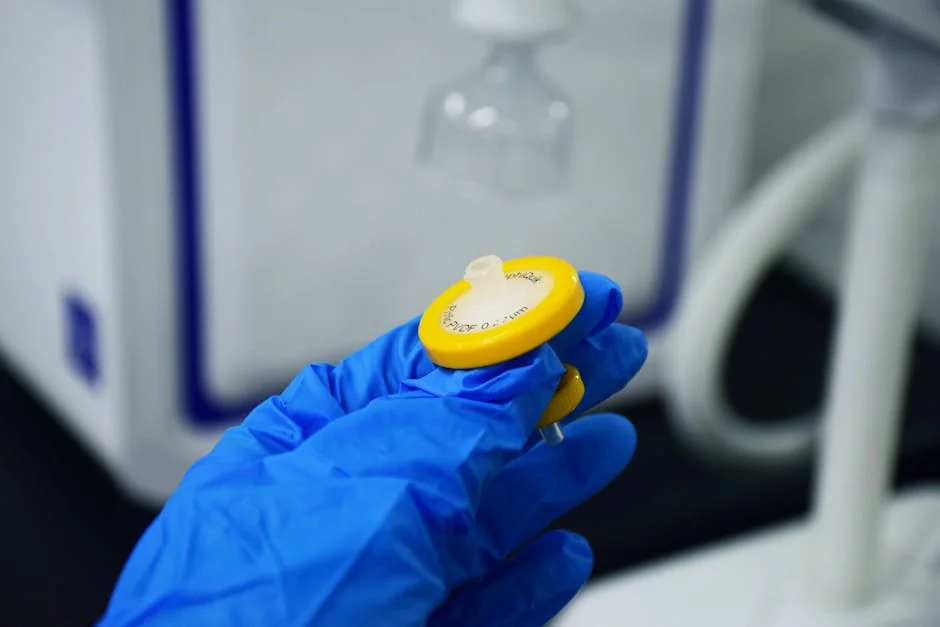
Sanitary cartridge filters use pleated or depth filter elements housed in a stainless steel enclosure to remove fine particles (0.1-100 μm) from liquids and gases. They are the most common choice for product filtration in food, beverage, pharmaceutical, and biotech applications.
Best for: Fine filtration, sterile processing, high-purity applications, product polishing
Key advantages: High efficiency (up to 99.98%), wide micron rating selection, easy element replacement, compact design
Table of Contents
- What is a Sanitary Cartridge Filter?
- Types of Cartridge Filters
- Filter Media Comparison
- Housing Configurations
- Selection Criteria
- Applications by Industry
- Sizing & Flow Rates
- Installation & Replacement
- Troubleshooting
- FAQ
1. What is a Sanitary Cartridge Filter?
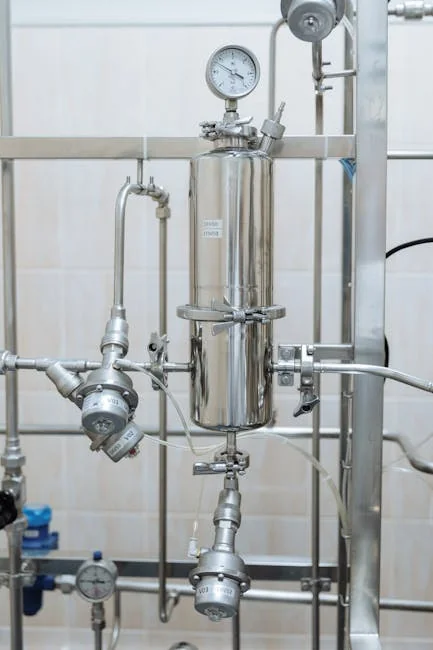
A sanitary cartridge filter consists of a replaceable filter element (cartridge) housed inside a polished stainless steel vessel. The housing features sanitary connections (tri-clamp, threaded, or flanged) and is designed for hygienic processing conditions.
Characteristics
| Feature | Specification |
|---|---|
| Filtration Range | 0.1 - 100 microns |
| Efficiency | 90% - 99.98% |
| Flow Rates | 1 - 500+ GPM (single to multi-round) |
| Pressure Rating | 150 PSI standard (300+ PSI high-pressure) |
| Temperature Range | -40°F to 400°F (-40°C to 200°C) |
| Materials | 304 or 316L stainless steel |
| Surface Finish | Ra ≤ 0.8 μm (product contact) |
| Connections | Tri-clamp, NPT, BSP, flanged |
Related: Learn about all filter types in our Ultimate Guide to Sanitary Filters.
2. Types of Cartridge Filters
2.1 Pleated Cartridge Filters
Pleated filters use folded filter media to maximize surface area.
Advantages:
- High dirt-holding capacity
- High flow rates
- Low pressure drop
- Wide micron rating selection (0.1-100 μm)
- Consistent performance
Applications: General purpose filtration, product polishing, pre-filtration
Media Options:
| Media Type | Micron Range | Temperature | Best For |
|---|---|---|---|
| Polyester (PET) | 0.5-100 μm | 180°F (82°C) | General purpose, water |
| Polypropylene (PP) | 0.5-100 μm | 180°F (82°C) | Chemical compatibility |
| Nylon | 0.1-50 μm | 200°F (93°C) | Solvents, fine filtration |
| PTFE | 0.1-50 μm | 250°F (121°C) | Aggressive chemicals |
| Glass Fiber | 0.3-50 μm | 250°F (121°C) | High temperature, coalescing |
| Cellulose | 1-100 μm | 180°F (82°C) | Food grade, biodegradable |
| Stainless Steel | 1-100 μm | 500°F (260°C) | Reusable, high temp |
2.2 Depth Cartridge Filters
Depth filters use thick, porous media to trap particles throughout the matrix.
Advantages:
- High contaminant capacity
- Gradient density (large to small pores)
- Cost-effective
- Good for gelatinous contaminants
Applications: Pre-filtration, high dirt load applications, gelatinous particles
Media Options:
- Polypropylene melt-blown: General purpose
- Cotton/string wound: Food grade, traditional
- Cellulose: Biodegradable, food applications
2.3 Membrane Cartridge Filters
Membrane filters use thin polymer membranes for absolute-rated filtration.
Advantages:
- Absolute rating (99.98% efficiency)
- Sterile filtration capability
- Validated performance
- Low extractables
Applications: Sterile filtration, pharmaceutical, biotech, final filtration
Media Options:
| Membrane | Micron Rating | Best For |
|---|---|---|
| PES (Polyethersulfone) | 0.1-0.45 μm | Aqueous solutions, high flow |
| PVDF (Polyvinylidene Fluoride) | 0.1-0.45 μm | Solvents, aggressive chemicals |
| PTFE (Hydrophilic) | 0.1-0.45 μm | Aggressive liquids |
| PTFE (Hydrophobic) | 0.1-0.45 μm | Vent filters, gas sterilization |
| Nylon | 0.1-0.45 μm | General purpose, food grade |
2.4 Filter Cartridge End Configurations
| End Style | Description | Application |
|---|---|---|
| 222 / O-Ring | Double O-ring seal, bayonet style | Most common, sanitary |
| 226 / Fin Seal | Metal fin with O-ring | High pressure, high flow |
| DOE / Double Open End | Open on both ends | Bag filter housings |
| Flat Gasket | Flat sealing surface | Standard industrial |
| Threaded | Screw-in connection | High pressure |
Related: For micron rating selection, see Understanding Micron Ratings.
3. Filter Media Comparison
3.1 Performance Comparison
| Media Type | Dirt Capacity | Flow Rate | Cost | Best For |
|---|---|---|---|---|
| Pleated PP | High | High | $ | General purpose |
| Pleated PES | Medium | Very High | $$$ | Pharma, biotech |
| Pleated PTFE | Medium | High | $$$$ | Chemicals |
| Depth PP | Very High | Medium | $ | Pre-filtration |
| Membrane PES | Low | High | $$$$ | Sterile filtration |
| String Wound | High | Low | $ | Traditional applications |
3.2 Temperature Ratings
| Media Type | Continuous Max | Peak/SIP |
|---|---|---|
| Polypropylene (PP) | 180°F (82°C) | 200°F (93°C) |
| Polyester (PET) | 180°F (82°C) | 200°F (93°C) |
| Nylon | 200°F (93°C) | 225°F (107°C) |
| PTFE | 250°F (121°C) | 300°F (149°C) |
| PES | 180°F (82°C) | 200°F (93°C) |
| PVDF | 200°F (93°C) | 225°F (107°C) |
| Glass Fiber | 250°F (121°C) | 300°F (149°C) |
| Stainless Steel | 500°F (260°C) | 800°F (427°C) |
4. Housing Configurations
4.1 Single-Round Housings
Single-round housings hold one filter cartridge.
Specifications:
- Flow rates: 1-50 GPM
- Compact footprint
- Lower initial cost
- Easy maintenance
Applications: Small systems, pilot plants, point-of-use, low flow applications
4.2 Multi-Round Housings
Multi-round housings hold multiple cartridges (2-100+).
Specifications:
- Flow rates: 50-1000+ GPM
- Extended service life
- Reduced downtime
- Scalable capacity
Common Configurations:
| Model | Number of Cartridges | Flow Rate (GPM) | Typical Application |
|---|---|---|---|
| 2-round | 2 | 50-100 | Small production |
| 3-round | 3 | 75-150 | Medium production |
| 5-round | 5 | 125-250 | Large production |
| 7-round | 7 | 175-350 | High flow |
| 10-round | 10 | 250-500 | Very high flow |
4.3 Housing Features
| Feature | Description | Benefit |
|---|---|---|
| Vent Port | Top-mounted NPT or tri-clamp | Air elimination |
| Drain Port | Bottom-mounted tri-clamp | Complete drainage |
| Pressure Gauges | Inlet/outlet gauge ports | Monitor ΔP |
| Sample Port | Downstream sampling | Quality verification |
| Leg Supports | Adjustable legs | Stable installation |
| Wall Mount Bracket | Mounting hardware | Space saving |
| Insulation Jacket | Thermal insulation | Temperature maintenance |
Related: For installation guidance, see Tri-Clamp Installation Guide.
5. Selection Criteria
Step 1: Define Application
| Question | Considerations |
|---|---|
| What fluid is being filtered? | Water, beer, chemicals, oil |
| What is the flow rate? | GPM or LPM requirement |
| What is the operating temperature? | Ambient, hot, CIP/SIP |
| What is the system pressure? | Operating and max pressure |
| What is the viscosity? | Low, medium, high |
Step 2: Determine Filtration Requirements
| Parameter | Questions |
|---|---|
| Particle Size | What micron rating is needed? |
| Contaminant Type | Hard particles, gelatinous, microbial? |
| Efficiency | Nominal or absolute rating? |
| Clarity | Product appearance requirements? |
| Sterility | Sterile filtration required? |
Step 3: Select Filter Media
| Application | Recommended Media | Micron Rating |
|---|---|---|
| General purpose water | Pleated PP | 5-25 μm |
| RO pre-filtration | Pleated PP | 1-5 μm |
| Beer polishing | Pleated PP or PES | 1-5 μm |
| Wine polishing | Pleated PP or Nylon | 3-5 μm |
| Juice clarification | Pleated PP | 5-10 μm |
| Pharmaceutical water | PES membrane | 0.2-0.45 μm |
| Solvent filtration | PTFE or PVDF | 1-10 μm |
| High temperature | Glass fiber or PTFE | 1-25 μm |
Step 4: Choose Housing Configuration
| Flow Rate | Recommended Configuration |
|---|---|
| < 20 GPM | Single-round housing |
| 20-100 GPM | 2-3 round housing |
| 100-250 GPM | 5-7 round housing |
| 250-500 GPM | 10-20 round housing |
| > 500 GPM | Custom multi-round or bag filter |
Step 5: Verify Compatibility
□ Material compatibility (housing: 304 or 316L)
□ Gasket/seal compatibility (EPDM, Viton, Silicone, PTFE)
□ Filter media chemical compatibility
□ Temperature rating exceeds operating temp
□ Pressure rating exceeds max system pressure
□ Certifications meet requirements (NSF, FDA, GMP)
Selection Help: See Understanding Micron Ratings for detailed rating guidance.
6. Applications by Industry
6.1 Brewery & Distillery
| Process Stage | Filter Type | Micron | Purpose |
|---|---|---|---|
| Wort transfer | Pleated PP | 10-20 μm | Remove trub, hop debris |
| Beer transfer | Pleated PP | 5-10 μm | Yeast reduction |
| Pre-packaging | Pleated PP | 1-5 μm | Brightness, stability |
| Final filtration | PES membrane | 0.45-0.65 μm | Microbial control |
| CIP systems | Pleated PP | 10-25 μm | Filter cleaning solutions |
Complete Guide: See Brewery Filtration Guide for detailed system design.
6.2 Food & Beverage
| Application | Filter Type | Micron | Purpose |
|---|---|---|---|
| Dairy | |||
| Milk standardization | Pleated PP | 10-50 μm | Remove sediment |
| Whey filtration | Pleated PP | 1-10 μm | Product recovery |
| CIP systems | Pleated PP | 10-25 μm | Protect spray balls |
| Beverage | |||
| Juice clarification | Pleated PP | 5-10 μm | Pectin, pulp removal |
| Wine polishing | Pleated PP/Nylon | 3-5 μm | Clarity, stability |
| Bottled water | Pleated PP | 1-5 μm | Particle removal |
| Edible Oils | |||
| Degumming | Pleated PP | 10-25 μm | Gum removal |
| Polishing | Pleated PP | 1-5 μm | Final clarity |
Industry Guide: See Food & Beverage Filtration Guide for sector-specific requirements.
6.3 Pharmaceutical & Biotech
| Application | Filter Type | Micron | Requirement |
|---|---|---|---|
| Water Systems | |||
| Raw water pre-filter | Pleated PP | 5-50 μm | Protect downstream |
| RO pre-filter | Pleated PP | 1-5 μm | Membrane protection |
| Purified water loop | PES membrane | 0.2-0.45 μm | Distribution |
| WFI (Water for Injection) | PES membrane | 0.2 μm | Sterile filtration |
| Process Filtration | |||
| Buffer solutions | PES membrane | 0.2-0.45 μm | Sterilizing grade |
| Media preparation | PES membrane | 0.1-0.2 μm | Sterile |
| Tank venting | PTFE (hydrophobic) | 0.2 μm | Air sterilization |
| Product filtration | PES or PVDF | 0.1-0.45 μm | Final product |
Pharma Guide: See Pharmaceutical Water Filtration Guide for GMP compliance.
6.4 Water Treatment
| Application | Filter Type | Micron | Purpose |
|---|---|---|---|
| Municipal water pre-filter | Pleated PP | 10-50 μm | Sediment removal |
| RO pre-filtration | Pleated PP | 1-5 μm | Protect membranes |
| UF pre-filtration | Pleated PP | 5-25 μm | Protect UF modules |
| Ultrapure water | PES membrane | 0.1-0.45 μm | Final filtration |
| Drinking water | Pleated PP | 1-10 μm | Particle removal |
6.5 Chemical Processing
| Application | Filter Type | Micron | Notes |
|---|---|---|---|
| Acid filtration | PTFE or PVDF | 1-10 μm | 316L housing required |
| Solvent filtration | PTFE or PVDF | 1-25 μm | Chemical compatibility |
| Paint & coatings | Pleated PP or Nylon | 10-25 μm | Particle removal |
| Electroplating | Pleated PP | 1-10 μm | Solution purity |
| Photoresist | PTFE membrane | 0.1-0.45 μm | Semiconductor grade |
7. Sizing & Flow Rates
7.1 Flow Rate Guidelines
| Cartridge Type | Single 10" Cartridge | Single 20" Cartridge | Single 30" Cartridge |
|---|---|---|---|
| Pleated PP (general) | 10-25 GPM | 20-50 GPM | 30-75 GPM |
| Pleated PES (pharma) | 15-30 GPM | 30-60 GPM | 45-90 GPM |
| Depth PP | 5-15 GPM | 10-30 GPM | 15-45 GPM |
| Membrane (0.2 μm) | 5-10 GPM | 10-20 GPM | 15-30 GPM |
| String Wound | 3-10 GPM | 6-20 GPM | 10-30 GPM |
7.2 Flow Rate Calculation
Basic Formula:
Required Flow Rate = Process Flow Rate

Number of Cartridges = Required Flow / Flow per Cartridge

Always add 20-30% safety margin
Example Calculation:
Process requirement: 100 GPM
Selected filter: Pleated PP (25 GPM per 10" cartridge)

Cartridges needed = 100 / 25 = 4 cartridges
With 25% safety margin = 4 × 1.25 = 5 cartridges

Select: 5-round or 7-round housing
7.3 Pressure Drop Considerations
Initial ΔP (clean filter):
- Pleated filters: 1-3 PSI
- Depth filters: 2-5 PSI
- Membrane filters: 3-8 PSI
Maximum ΔP (change-out point):
- Pleated filters: 25-35 PSI
- Depth filters: 25-35 PSI
- Membrane filters: 30-40 PSI
Viscosity Correction:
For fluids other than water:
Corrected Flow = Water Flow × Viscosity Correction Factor

Viscosity Correction Factors:
- Water (1 cP): 1.0
- Light oil (10 cP): 0.5
- Medium oil (50 cP): 0.25
- Heavy oil (100 cP): 0.15
8. Installation & Replacement
8.1 Cartridge Installation
1. Depressurize and drain housing
2. Open housing (remove cap/head)
3. Remove old cartridge(s)
4. Clean housing interior thoroughly
5. Inspect housing for damage
6. Lubricate new cartridge O-rings (food-grade)
7. Insert new cartridge(s) - push down and twist
8. Verify cartridge is seated properly
9. Reassemble housing
10. Slowly pressurize and check for leaks
Detailed Instructions: See Tri-Clamp Installation Guide for connection assembly.
8.2 Change-Out Indicators
Replace cartridges when:
| Indicator | Threshold | Action |
|---|---|---|
| Differential Pressure | ΔP > 25-35 PSI | Replace immediately |
| Scheduled Maintenance | Per SOP (typically 3-6 months) | Replace |
| Flow Rate Drop | >20% reduction | Investigate/replace |
| Product Quality | Out of specification | Replace |
| Visual Inspection | Damage, collapse, extrusion | Replace |
8.3 Maintenance Schedule
| Task | Frequency | Notes |
|---|---|---|
| Visual inspection | Daily | Check for leaks |
| Differential pressure | Continuous | Monitor ΔP |
| Cartridge replacement | As needed | Based on ΔP or schedule |
| Housing cleaning | Monthly (or CIP) | Remove residues |
| Gasket replacement | Every 6-12 months | Prevent leaks |
| Passivation | Annually | Restore corrosion resistance |
Maintenance SOP: See Sanitary Filter Maintenance Guide for detailed procedures.
9. Troubleshooting
Problem: High Initial Pressure Drop
| Possible Cause | Solution |
|---|---|
| Wrong micron rating (too fine) | Verify application requirements |
| Viscosity higher than expected | Apply viscosity correction |
| Cartridges installed incorrectly | Verify proper seating |
| Housing undersized | Add more cartridges |
| Valve partially closed | Check all valves |
Problem: Short Cartridge Life
| Possible Cause | Solution |
|---|---|
| High contaminant load | Add pre-filtration stage |
| Wrong filter type | Switch to depth filter |
| Flow rate too high | Reduce flow or add cartridges |
| Gelatinous contaminants | Use depth or bag filter |
| Microbial growth | Sanitize system, increase change frequency |
Problem: Poor Product Quality
| Possible Cause | Solution |
|---|---|
| Wrong micron rating | Verify and adjust rating |
| Cartridge damage | Inspect and replace |
| Bypass (improper installation) | Verify cartridge seating |
| Housing damage | Inspect and repair |
| Downstream contamination | Check entire system |
Problem: Leaking Housing
| Possible Cause | Solution |
|---|---|
| Dirty sealing surfaces | Clean thoroughly |
| Damaged gasket/O-ring | Replace gasket |
| Overtightened | Loosen and retorque properly |
| Misaligned | Realign and reinstall |
| Cracked housing | Replace housing |
Related: For installation guidance, see Tri-Clamp Installation Guide.
10. FAQ
What is the difference between pleated and depth cartridge filters?
Pleated filters use folded media for high surface area, providing higher flow rates and better efficiency. Depth filters use thick, porous media that traps particles throughout the matrix, offering higher dirt capacity for pre-filtration.
How often should I replace sanitary filter cartridges?
Replace when:
- Differential pressure reaches 25-35 PSI
- Scheduled interval (typically 3-6 months)
- Flow rate drops significantly
- Product quality issues
- Visible damage
What micron filter do I need for my application?
Depends on your requirements:
- Pre-filtration: 10-50 μm
- General purpose: 5-10 μm
- Product polishing: 1-5 μm
- Bacteria reduction: 0.45 μm
- Sterile filtration: 0.2 μm (absolute)
See Understanding Micron Ratings for detailed guidance.
Can I clean and reuse pleated cartridge filters?
Generally no. Pleated cartridges are designed for single use. Cleaning can damage the media and compromise filtration efficiency. Some depth cartridges can be backflushed, but replacement is recommended for sanitary applications.
What is the difference between 222 and 226 cartridge ends?
222 (double O-ring): Uses two O-rings for sealing, bayonet-style twist-lock. Most common for sanitary applications.
226 (fin seal): Uses metal fins with O-ring for high-pressure and high-flow applications. More secure connection.
Do I need a single-round or multi-round housing?
Choose based on flow rate:
- < 50 GPM: Single-round
- 50-150 GPM: 2-3 round
- 150-300 GPM: 5-7 round
- > 300 GPM: 10+ round or bag filter
Multi-round housings extend service life and reduce change-out frequency.
What material should I choose for the housing?
- 304 SS: Food, beverage, dairy, general applications
- 316L SS: Pharmaceutical, chemicals, coastal environments, high-corrosion
See 304 vs 316L Stainless Steel for detailed comparison.
How do I know if my cartridge is compatible with my process fluid?
Check chemical compatibility charts for:
- Filter media (PP, PES, PTFE, etc.)
- Gasket/O-ring material (EPDM, Viton, Silicone, PTFE)
- Housing material (304 or 316L SS)
When in doubt, request compatibility testing from the manufacturer.
Related Resources
Technical Guides
- Ultimate Guide to Sanitary Filters - Complete filter guide
- Understanding Micron Ratings - Rating selection
- 304 vs 316L Stainless Steel - Material selection
Industry Applications
- Brewery Filtration Guide - Brewery systems
- Food & Beverage Filtration - Industry requirements
- Pharmaceutical Water Filtration - GMP compliance
Installation & Maintenance
- Tri-Clamp Installation Guide - Proper assembly
- Filter Maintenance SOP - Cleaning procedures
- Sanitary Filter vs Strainer - Filter types compared
NSF, FDA, GMP Certifications for Sanitary Filters: Complete Guide
304 vs 316L Stainless Steel for Sanitary Filters: Complete Comparison
Related Article

CONTACT US
Subscribe to our newsletter to receive the latest information