
304 vs 316L Stainless Steel for Sanitary Filters: Complete Comparison
Quick Answer
304 stainless steel contains 18% chromium and 8% nickel, suitable for most food and beverage applications.
316L stainless steel contains 16% chromium, 10% nickel, and 2-3% molybdenum, providing superior corrosion resistance for pharmaceutical, chemical, and harsh environments.
Choose 304 when: Cost is a concern, standard food/beverage applications, non-corrosive environments.
Choose 316L when: Pharmaceutical compliance required, corrosive chemicals, coastal environments, high-chloride conditions.
Table of Contents
- Composition Comparison
- Key Differences
- Corrosion Resistance
- Mechanical Properties
- Cost Comparison
- Industry Recommendations
- How to Identify 304 vs 316L
- FAQ
1. Composition Comparison
Chemical Composition
| Element | 304 Stainless Steel | 316L Stainless Steel |
|---|---|---|
| Chromium (Cr) | 18-20% | 16-18% |
| Nickel (Ni) | 8-10.5% | 10-14% |
| Molybdenum (Mo) | 0% | 2-3% |
| Carbon (C) | ≤0.08% | ≤0.03% (L = Low) |
| Manganese (Mn) | ≤2.0% | ≤2.0% |
| Silicon (Si) | ≤1.0% | ≤1.0% |
| Phosphorus (P) | ≤0.045% | ≤0.045% |
| Sulfur (S) | ≤0.03% | ≤0.03% |
| Iron (Fe) | Balance | Balance |
Key Differences Explained
Molybdenum (2-3% in 316L):
- Dramatically improves corrosion resistance
- Especially effective against chlorides and acids
- The primary reason for 316L's superior performance
Low Carbon (0.03% max in 316L):
- Prevents carbide precipitation during welding
- Maintains corrosion resistance in welded areas
- "L" stands for "Low carbon"
Higher Nickel (10-14% in 316L):
- Enhances overall corrosion resistance
- Improves formability and ductility
- Better high-temperature performance
Related: Learn about surface finish requirements in our Ultimate Guide to Sanitary Filters.
2. Key Differences at a Glance
| Feature | 304 Stainless Steel | 316L Stainless Steel |
|---|---|---|
| Corrosion Resistance | Good | Excellent |
| Chloride Resistance | Moderate | Superior |
| Acid Resistance | Fair | Good |
| Weldability | Good | Excellent |
| Formability | Excellent | Good |
| High-Temp Strength | Good | Better |
| Cost | Lower | Higher (20-40% more) |
| Availability | Widely available | Widely available |
| Best For | Food, dairy, general | Pharma, chemical, marine |
3. Corrosion Resistance
3.1 General Corrosion Resistance
304 Stainless Steel:
- Excellent resistance to atmospheric corrosion
- Good resistance to organic chemicals
- Suitable for most food and beverage applications
- May corrode in harsh chemical environments
316L Stainless Steel:
- Superior resistance to general corrosion
- Excellent chemical resistance
- Required for pharmaceutical applications
- Suitable for harsh industrial environments
3.2 Pitting & Crevice Corrosion
Pitting and crevice corrosion occur in chloride-containing environments.
| Environment | 304 SS Performance | 316L SS Performance |
|---|---|---|
| Fresh water | Excellent | Excellent |
| Tap water | Excellent | Excellent |
| Sea water | Poor | Good |
| Salt air (coastal) | Fair | Excellent |
| Chlorinated water | Fair | Good |
| Bleach (NaOCl) | Poor | Good |
Critical: For coastal facilities or chlorinated water systems, 316L is strongly recommended.
3.3 Chemical Compatibility
| Chemical | 304 SS | 316L SS |
|---|---|---|
| Acids | ||
| Acetic Acid (vinegar) | Good | Excellent |
| Citric Acid | Good | Excellent |
| Phosphoric Acid | Fair | Good |
| Sulfuric Acid (dilute) | Poor | Fair |
| Hydrochloric Acid | Poor | Poor |
| Nitric Acid | Good | Good |
| Alkalis | ||
| Sodium Hydroxide (NaOH) | Good | Excellent |
| Ammonia | Good | Excellent |
| Solvents | ||
| Alcohols | Excellent | Excellent |
| Acetone | Excellent | Excellent |
| Hydrocarbons | Excellent | Excellent |
| Other | ||
| Chlorides (general) | Poor | Good |
| Bromides | Poor | Fair |
| Iodides | Poor | Fair |
Warning: Neither 304 nor 316L is suitable for hydrochloric acid service. Consider Hastelloy® or titanium for harsh acids.
3.4 Pitting Resistance Equivalent Number (PREN)
PREN is a calculated value that predicts pitting corrosion resistance:
PREN = %Cr + 3.3 × %Mo + 16 × %N

Where:
Cr = Chromium content
Mo = Molybdenum content
N = Nitrogen content
| Material | PREN Value | Corrosion Resistance |
|---|---|---|
| 304 SS | ~19 | Good |
| 316L SS | ~25 | Excellent |
| 2205 Duplex | ~35 | Superior |
| 6% Mo Alloys | ~45 | Exceptional |
Higher PREN = Better pitting resistance
4. Mechanical Properties
4.1 Physical Properties
| Property | 304 SS | 316L SS |
|---|---|---|
| Density | 8.0 g/cm³ | 8.0 g/cm³ |
| Melting Point | 1400-1450°C | 1375-1400°C |
| Specific Heat | 500 J/kg·K | 500 J/kg·K |
| Thermal Conductivity | 16.2 W/m·K | 16.3 W/m·K |
| Thermal Expansion | 17.2 μm/m·°C | 16.0 μm/m·°C |
| Electrical Resistivity | 72 μΩ·cm | 74 μΩ·cm |
4.2 Mechanical Properties (Annealed Condition)
| Property | 304 SS | 316L SS |
|---|---|---|
| Tensile Strength | 515 MPa (75 ksi) | 485 MPa (70 ksi) |
| Yield Strength (0.2% offset) | 205 MPa (30 ksi) | 170 MPa (25 ksi) |
| Elongation | 40% | 40% |
| Hardness (Brinell) | 201 HB | 217 HB |
| Hardness (Rockwell B) | 92 HRB | 95 HRB |
4.3 High-Temperature Properties
| Property | 304 SS | 316L SS |
|---|---|---|
| Max Service Temp (Continuous) | 870°C (1600°F) | 870°C (1600°F) |
| Max Service Temp (Intermittent) | 925°C (1700°F) | 925°C (1700°F) |
| Creep Strength | Good | Better |
Note: For sanitary filter applications, both grades exceed typical operating temperatures (usually <200°C / 400°F).
4.4 Weldability
| Aspect | 304 SS | 316L SS |
|---|---|---|
| Weldability Rating | Excellent | Excellent |
| Post-Weld Annealing | May be required | Usually not required |
| Sensitization Risk | Moderate | Low (due to low carbon) |
| Filler Metal | 308L, 309L | 316L, 309L |
316L Advantage: The low carbon content (<0.03%) prevents carbide precipitation during welding, maintaining corrosion resistance in the heat-affected zone (HAZ).
5. Cost Comparison
5.1 Material Cost
| Material | Relative Cost | Price Range (per kg) |
|---|---|---|
| 304 SS | 100% (baseline) | $3 - $5 |
| 316L SS | 120-140% | $4 - $7 |
Price Premium: 316L typically costs 20-40% more than 304.
5.2 Filter Housing Cost Comparison
| Product | 304 SS Price | 316L SS Price | Premium |
|---|---|---|---|
| Single-Round Housing (10") | $300 - $500 | $400 - $700 | +30-40% |
| Multi-Round Housing (5-round) | $600 - $900 | $800 - $1,300 | +30-45% |
| Bag Filter Housing | $250 - $450 | $350 - $600 | +30-35% |
| Custom Housing | $500 - $1,500 | $700 - $2,100 | +35-40% |
5.3 Total Cost of Ownership
While 316L has a higher initial cost, it may offer lower total cost in certain applications:
| Scenario | 304 SS | 316L SS | Better Choice |
|---|---|---|---|
| Standard food application | Lower initial, good life | Higher initial, similar life | 304 |
| Coastal environment | May corrode in 2-3 years | No corrosion, 10+ years | 316L |
| Pharmaceutical (required) | Not compliant | Compliant | 316L |
| Chemical processing | May fail prematurely | Long service life | 316L |
| Dairy processing | Excellent performance | Excellent performance | 304 |
Rule of Thumb: If your application involves chlorides, chemicals, or coastal location, the 316L premium is justified by extended service life.
6. Industry Recommendations
6.1 Food & Beverage Industry
| Application | Recommended Grade | Rationale |
|---|---|---|
| Dairy Processing | 304 SS | Excellent performance, cost-effective |
| Brewery | 304 SS | Standard industry practice |
| Wine Production | 304 SS | Suitable for all wine contact |
| Juice Processing | 304 SS | Acid resistance adequate |
| Edible Oils | 304 SS | No corrosion concerns |
| Meat Processing | 304 SS | Standard for food contact |
| High-Salt Products | 316L SS | Chloride resistance needed |
| Coastal Facility | 316L SS | Salt air corrosion protection |
Industry Guide: See Food & Beverage Filtration Guide for detailed requirements.
6.2 Pharmaceutical & Biotech Industry
| Application | Recommended Grade | Rationale |
|---|---|---|
| Purified Water (PW) | 316L SS | Industry standard, GMP compliance |
| Water for Injection (WFI) | 316L SS | Required by pharmacopeia |
| Process Vessels | 316L SS | Regulatory requirement |
| Clean Steam | 316L SS | High purity requirement |
| Buffer Solutions | 316L SS | Corrosion resistance |
| Bioreactors | 316L SS | Industry standard |
Pharma Guide: See Pharmaceutical Water Filtration Guide for GMP requirements.
6.3 Chemical Processing Industry
| Application | Recommended Grade | Rationale |
|---|---|---|
| Organic Solvents | 304 SS | Adequate resistance |
| Mild Acids | 316L SS | Better acid resistance |
| Chlorides | 316L SS | Required for chloride service |
| Alkalis | 304 or 316L | Both suitable |
| Harsh Acids | Exotic alloys | Neither 304 nor 316L suitable |
6.4 Water Treatment Industry
| Application | Recommended Grade | Rationale |
|---|---|---|
| Municipal Water | 304 SS | Standard practice |
| RO Pre-Filtration | 304 SS | No corrosion concerns |
| Ultrapure Water | 316L SS | Industry standard |
| Seawater | Exotic alloys | 316L may fail, consider titanium |
| Coastal Plant | 316L SS | Salt air protection |
6.5 Summary by Industry
| Industry | Standard Grade | Upgrade to 316L When |
|---|---|---|
| Food & Beverage | 304 | High salt, coastal location |
| Dairy | 304 | Rarely needed |
| Brewery | 304 | Coastal location |
| Pharmaceutical | 316L | Always (required) |
| Biotech | 316L | Always (required) |
| Chemical | Case-by-case | Most applications |
| Water Treatment | 304 | Ultrapure, coastal |
| Cosmetics | 304 | High-salt formulations |
7. How to Identify 304 vs 316L
7.1 Visual Identification
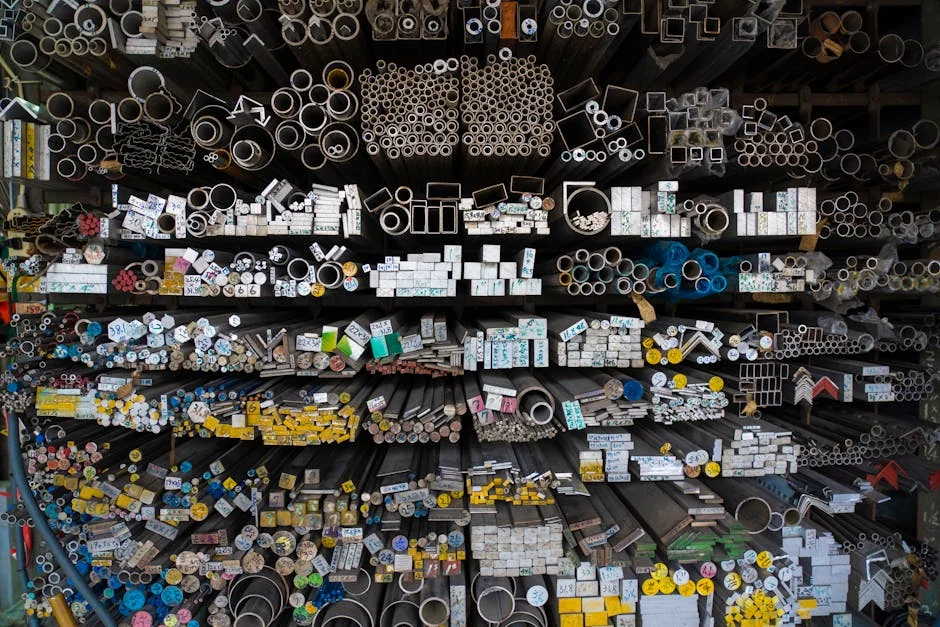
You cannot reliably distinguish 304 from 316L by visual inspection alone. Both have similar appearance and finish.
7.2 Marking & Documentation
Check for:
| Identification Method | What to Look For |
|---|---|
| Material Certificate | Mill certificate showing chemical composition |
| Stamp/Marking | "304", "304L", "316", "316L" stamped on housing |
| Heat Number | Traceable to mill certificate |
| PMI Test | Positive Material Identification (XRF analyzer) |
7.3 Chemical Spot Tests
Molybdenum Test (identifies 316L):
- Apply molybdenum test solution to clean surface
- 316L will show a color change (pink/red)
- 304 will show no change
Note: Spot tests are indicative but not definitive. For critical applications, use PMI testing.
7.4 PMI Testing (Positive Material Identification)
XRF (X-ray Fluorescence) Analyzer:
- Non-destructive testing
- Provides exact chemical composition
- Identifies all alloying elements
- Industry standard for verification
When PMI Testing is Required:
- Pharmaceutical installations (validation)
- Critical chemical service
- Regulatory compliance
- Material verification programs
8. FAQ
Is 316L always better than 304?
No. While 316L has superior corrosion resistance, 304 is perfectly suitable for most food and beverage applications and costs 20-40% less. Choose based on your specific requirements.
Can I use 304 for pharmaceutical applications?
Generally no. Pharmaceutical water systems (PW, WFI) and process equipment typically require 316L per GMP guidelines and pharmacopeia requirements. Some non-product contact components may use 304.
Will 304 stainless steel rust?
304 stainless steel is highly corrosion-resistant but can rust under certain conditions:
- Exposure to chlorides (salt water, bleach)
- Coastal environments (salt air)
- Harsh chemicals
- Damaged passive layer
Proper maintenance and passivation help prevent rust.
What is the "L" in 316L?
"L" stands for Low carbon. 316L has a maximum carbon content of 0.03% (vs 0.08% for standard 316). Low carbon prevents carbide precipitation during welding, maintaining corrosion resistance.
Is 304 or 316L better for brewery equipment?
304 is standard for brewery equipment and perfectly suitable for beer production. Upgrade to 316L only if:
- Brewery is in coastal location
- Using aggressive cleaning chemicals
- High-chloride water source
See Brewery Filtration Guide for details.
How long do sanitary filter housings last?
With proper maintenance:
- 304 SS: 10-15 years (standard environments)
- 316L SS: 15-25+ years (harsh environments)
Factors affecting life: chemical exposure, cleaning frequency, water quality, maintenance practices.
Can I connect 304 and 316L components together?
Yes, 304 and 316L can be connected without galvanic corrosion concerns since they have similar electrochemical potentials. However, the assembly will only be as corrosion-resistant as the weaker material (304).
Do I need 316L for dairy processing?
No, 304 is standard for dairy processing equipment and fully suitable for milk, whey, and dairy product contact. 316L is only needed for specific high-corrosion cleaning applications.
How can I verify my supplier is providing 316L as specified?
Request:
- Material Certificate (Mill Cert): Shows actual chemical composition
- PMI Test Report: XRF verification of alloy content
- Traceability: Heat number linking to mill certificate
- Third-Party Inspection: For critical applications
Related Resources
Technical Guides
- Ultimate Guide to Sanitary Filters - Complete filter selection guide
- Understanding Micron Ratings - Filtration efficiency explained
- Sanitary Filter Certifications - NSF, FDA, GMP requirements
Industry Applications
- Food & Beverage Filtration - Industry-specific guidance
- Brewery Filtration Guide - Complete brewery systems
- Pharmaceutical Water Filtration - GMP compliance
Installation & Maintenance
- Tri-Clamp Installation Guide - Proper assembly procedures
- Filter Maintenance SOP - Cleaning and maintenance
Sanitary Cartridge Filters: Complete Selection & Application Guide
Brewery Filtration Guide: Complete System Design & Selection
Related Article

CONTACT US
Subscribe to our newsletter to receive the latest information