Understanding Flanges: The Backbone of Industrial Piping Systems
In the world of industrial piping systems, flanges serve as one of the most critical yet often overlooked components that keep our modern infrastructure running smoothly. From oil refineries and chemical plants to water treatment facilities and power generation stations, these circular metal discs with bolt holes play an essential role in connecting pipes, valves, and equipment safely and reliably. As a leading manufacturer in the piping equipment industry, HAINER STEEL has spent years perfecting the art and science of flange production, and we’d like to share our knowledge about these vital components.
At its core, a flange is a disk-shaped component with an extended rim designed to connect two sections of pipe, attach pipes to equipment, or seal off piping systems. While the concept seems simple, the engineering behind a properly designed flange is quite sophisticated. Flanges work by creating a bolted joint between two mating surfaces, with a gasket sandwiched in between to ensure a leak-proof seal. This design offers significant advantages over permanent welded connections, particularly when it comes to maintenance and inspection. When a valve needs replacement or a pipe section requires cleaning, flanged connections can be easily disassembled and reassembled without cutting or welding, saving both time and money.
Versatile Types and Industrial Applications
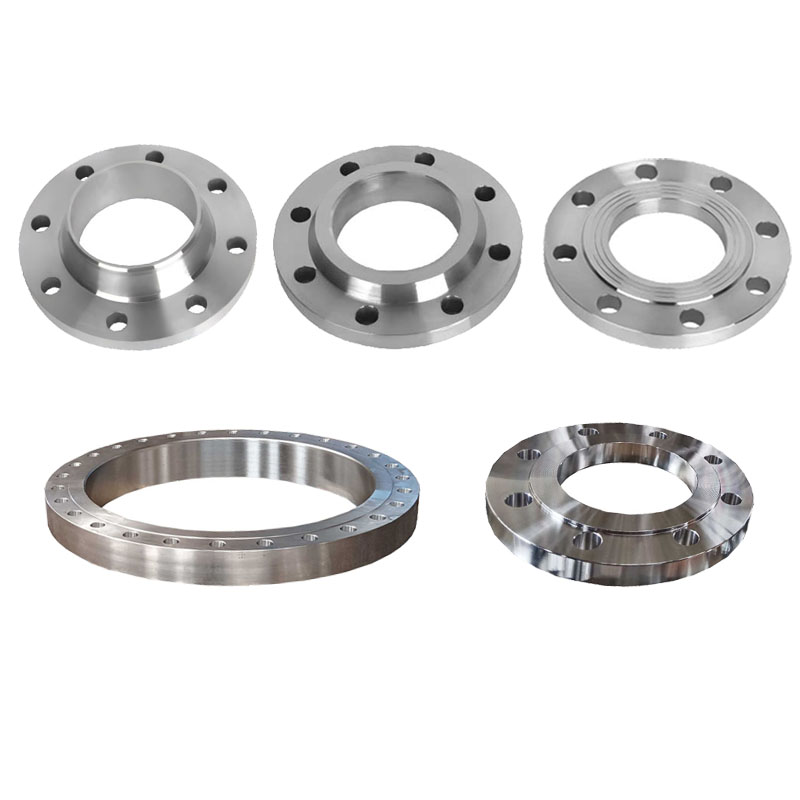
The variety of flange types available today reflects the diverse demands of modern industry. The weld neck flange stands out as the most widely used and most robust option, featuring a long tapered neck that provides a gradual transition from the flange thickness to the pipe wall. This smooth transition is more than just aesthetic – it’s a critical engineering feature that distributes stress evenly and handles the repeated bending forces caused by thermal expansion and contraction. When you see a weld neck flange in a high-pressure steam line or a critical petrochemical process, you’re looking at a component designed to last for decades under extreme conditions. The full penetration butt weld used to attach these flanges allows for radiographic or ultrasonic testing, giving engineers complete confidence in the connection’s integrity. With a fatigue life three times that of slip-on flanges, weld neck flanges are the go-to choice for pressure ratings from 150# up to 2500# and for any application where failure simply isn’t an option.
For applications where the extreme performance of weld neck flanges isn’t necessary, slip-on flanges offer an economical alternative that still provides reliable service. These flanges slide over the outside diameter of the pipe and are attached with fillet welds at the flange hub. While they have approximately two-thirds the calculated strength of weld neck flanges under internal pressure, they’re perfectly adequate for low to moderate pressure applications up to Class 300 or 600. You’ll commonly find slip-on flanges in HVAC systems, water distribution networks, and chemical processing facilities where the combination of reasonable cost and good performance makes them an ideal choice. The simpler welding requirements also make them faster to install, which can be a significant advantage in large construction projects where time is money.
When a piping system needs to be sealed off completely, blind flanges come into play. These solid discs without any bore opening serve as end caps for pipes or as covers for equipment nozzles and vessel openings. Because they must withstand the full force of the system’s internal pressure without any pipe support, blind flanges require substantial thickness and careful bolt loading. They’re invaluable during pressure testing, when sections of a system need to be isolated for maintenance, or when future expansion is planned but not yet implemented. The beauty of a blind flange is its flexibility – it can be easily removed when the time comes to extend the system, without any need for cutting or hot work.
For smaller diameter high-pressure applications, socket weld flanges provide an excellent solution. Similar to slip-on flanges but with a counterbored shoulder that acts as a positive stop for pipe insertion, these flanges create a flush internal surface that’s particularly important when dealing with corrosive or erosive fluids. The socket weld design offers 50% higher fatigue strength than double-welded slip-on flanges while maintaining similar static strength. They’re particularly popular in instrumentation lines and small process piping where precision and reliability are paramount.
In systems that require frequent disassembly or where the piping material must resist corrosion while keeping costs reasonable, lap joint flanges paired with stub ends offer unique advantages. The flange itself rotates freely on the pipe, making bolt hole alignment much easier during installation – anyone who’s struggled to line up bolt holes on a fixed flange will appreciate this feature. More importantly, because the flange never contacts the process fluid, it can be made from inexpensive carbon steel while the stub end is fabricated from expensive corrosion-resistant alloys. This material optimization can result in significant cost savings on large projects, and the flanges can be reused even when the stub ends need replacement due to corrosion or erosion.
Sometimes welding isn’t permitted or practical, and that’s where threaded flanges shine. With internal threads that screw onto threaded pipe, these flanges provide a mechanical connection without any heat input. While they’re limited to lower pressure applications and shouldn’t be used in severe cyclic service, they’re perfect for utility systems, areas where fire prevention is critical, or temporary installations where flexibility is valued.
The face of a flange – the sealing surface where it mates with its partner – comes in several configurations, each optimized for specific service conditions. The raised face design, where the sealing surface is slightly elevated above the main flange body, is by far the most common. It works with a wide variety of gasket materials and provides excellent sealing for most applications. Flat face flanges, where the entire surface is level, are typically used with cast iron flanges or in low-pressure services. For the most demanding applications involving very high pressures or extreme temperatures, ring type joint (RTJ) facings with their precision-machined ring grooves and metal ring gaskets provide the ultimate in sealing performance.
Material Science and International Standards
Material selection for flanges is just as critical as choosing the right type. Carbon steel flanges, particularly those made from ASTM A105 forged material, dominate the market due to their excellent combination of strength, weldability, and cost-effectiveness. For low-temperature services where impact toughness becomes critical, ASTM A350 grades like LF2 ensure reliable performance even in Arctic conditions. When corrosion resistance enters the picture, stainless steel flanges take center stage. The 304 and 316 families of austenitic stainless steel offer excellent resistance to a wide range of chemicals, with the molybdenum-bearing 316 grades providing superior performance in chloride-containing environments. For the most aggressive services or where both high strength and corrosion resistance are needed, duplex stainless steels and nickel-based alloys represent the pinnacle of flange metallurgy, though their higher cost means they’re reserved for truly demanding applications.
The global nature of industrial projects means that flanges must conform to various national and international standards. American standards, primarily ASME B16.5 for sizes up to 24 inches and ASME B16.47 for larger diameters, use a pound class pressure rating system (150#, 300#, 600#, etc.). European standards like EN 1092-1 employ a PN (nominal pressure) rating system, while Japanese industry follows JIS standards, and China has its own HG/T and GB/T specifications. At HAINER STEEL, we manufacture flanges to all these standards, ensuring that our products can integrate seamlessly into projects anywhere in the world. Understanding that a Class 300 ASME flange roughly corresponds to a PN50 European flange helps engineers make informed decisions when working across different standard systems.
Selecting the right flange for an application requires balancing multiple factors. High-pressure and high-temperature services almost always call for weld neck flanges, while lower pressure utility systems can use slip-on or threaded designs to save costs. Corrosive media dictate material choices, with stainless steel or exotic alloys replacing carbon steel. Systems that require frequent maintenance benefit from lap joint flanges, while critical services where failure could have catastrophic consequences warrant the highest quality weld neck flanges with full radiographic testing. The initial cost difference between a slip-on and a weld neck flange might seem significant, but when amortized over a 30-year service life in a critical application, the superior reliability of the weld neck design makes it the economical choice.
Installation Excellence and Future Sustainability
Proper installation is just as important as proper selection. Weld neck flanges require skilled welders who can produce the full penetration butt welds that give these flanges their strength. Bolt tightening must follow proper procedures, typically using a star or cross pattern to ensure even load distribution and prevent gasket damage. The choice of gasket material – whether spiral wound, metal ring, or non-metallic sheet – must match both the flange facing and the service conditions. Even the best flange will leak if the gasket is wrong or if the bolts aren’t properly torqued.
At HAINER STEEL, we’ve built our reputation on understanding these nuances and translating them into high-quality products. Our ISO 9001:2015 certified manufacturing processes ensure consistency and reliability across every flange we produce. We work with carbon steel, alloy steel, stainless steel in various grades, duplex stainless steel, and nickel-based alloys, giving us the flexibility to meet virtually any specification. Whether you need a single custom flange for a repair project or thousands of standard units for a new construction, we have the capacity and expertise to deliver.
Our flanges find their way into some of the world’s most demanding applications. In offshore oil platforms where failure could have environmental and safety catastrophes, our weld neck flanges provide the reliability operators demand. Chemical plants processing aggressive acids and bases depend on our stainless steel and exotic alloy flanges to resist corrosion year after year. Power plants generating electricity for millions rely on our high-temperature flanges to maintain system integrity through countless thermal cycles. Municipal water systems use our cost-effective flanges to deliver clean water to communities. Each application has its own specific requirements, and we’ve made it our business to understand them all.
Looking at the broader picture, the humble flange represents a perfect example of how seemingly simple mechanical components enable our modern technological civilization. Without reliable pipe connections, we couldn’t safely transport oil and gas across continents, couldn’t process the chemicals that go into everything from medicines to plastics, couldn’t generate and distribute the electricity that powers our cities, or couldn’t deliver clean water to our homes. The next time you turn on a tap, fill up your car, or flip a light switch, remember that somewhere in the infrastructure supporting that action, flanges are quietly doing their job, maintaining the connections that keep our world running.
As we continue to advance into an era focused on sustainable energy and environmental responsibility, the role of high-quality flanges becomes even more critical. Renewable energy facilities, carbon capture systems, and green hydrogen production all require reliable piping systems built with components that can withstand decades of service. At HAINER STEEL, we’re committed to being part of this sustainable future, continuously improving our manufacturing processes to be more efficient and environmentally friendly while maintaining the uncompromising quality our customers expect. We’re not just making flanges – we’re providing the reliable connections that will help build a better tomorrow.
Whether you’re an engineer specifying components for a new project, a maintenance professional planning a turnaround, or a procurement specialist seeking reliable suppliers, we invite you to discover how HAINER STEEL’s expertise in flange manufacturing can contribute to your success. With our comprehensive product range, commitment to quality, and customer-focused approach, we’re ready to be your trusted partner in piping solutions.
About HAINER STEEL
WENZHOU HAINER STEEL TECH. CO., LTD. specializes in manufacturing and supplying flanges, elbows, fittings, steel pipes, valves, and complete piping equipment solutions. Serving industries from oil and gas to sustainable energy infrastructure worldwide, we combine precision manufacturing, reliable performance, and exceptional customer service. Our products are manufactured from carbon steel, alloy steel, stainless steel, duplex steel, and nickel-based alloys to meet the most demanding specifications and standards including ASME, EN, JIS, and Chinese standards.
Ball Valve Selection Guide: Floating Ball Valve vs Fixed Ball Valve - How to Choose
Forging vs. Casting: A Comprehensive Comparative Analysis
Related Article

CONTACT US
Subscribe to our newsletter to receive the latest information